
What N°5 smells like
Editorial inference
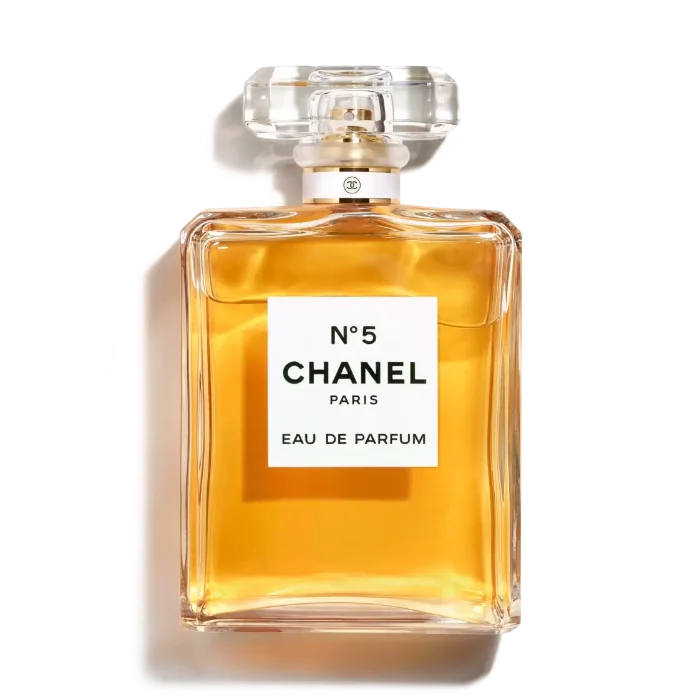
Aldehydes give it a bright, soapy sparkle at the start, over a bouquet of rose and jasmine. As it dries down it turns soft, powdery and warm, with vanilla and woods underneath.
N°5 notes
Brand description Source: Chanel.
- Top notes
- aldehydes, citrus notes, neroli
- Heart notes
- May rose, Grasse jasmine, ylang-ylang
- Base notes
- bourbon vanilla
Chanel describes the notes in prose rather than as a formal pyramid; the split here follows its description. Fragrantica’s longer list also includes iris, lily of the valley, sandalwood, vetiver, patchouli and oakmoss.
How long N°5 lasts, and how it wears
Editorial inference Typical figures, not our own timing.
- How long it lasts
- 6–8 hours
- Projection
- Noticeable for the first hour or two, then a soft, close trail
- Season
- Autumn and winter; fine year-round with a light hand
- Best for
- Occasions, evenings, the office in moderation
- How much to spray
- 1–2 sprays
Eau de Parfum strength over a vanilla and woody base; Fragrantica’s community rates longevity and sillage as average, with many saying it becomes a skin scent fairly quickly but stays detectable for several hours. Skin, climate and how much you spray all move these numbers, which is one more reason to try a sample before a bottle.
N°5 is one of our best perfumes for women.
To get more from a bottle, see where to spray and how to make perfume last longer, how to layer it with another scent, and how to store it so it doesn’t go off.
Should you sample it?
Editorial inference
You might like it if
You like classic, elegant florals and want to try the benchmark many modern perfumes are measured against.
You might skip it if
Powdery or old-fashioned florals don’t suit you: the aldehydic opening in particular divides people.
Why N°5 can smell soapy or powdery
Editorial inference
The soapy sparkle comes from aldehydes, a family of aroma chemicals that N°5 used in unusually large amounts for its time. The ones most associated with it are known in perfumery as C10, C11 and C12. On their own they smell waxy, citrusy and slightly metallic, and because soap makers have used them for a long time to give a fresh, clean smell, most of us now read them as “soap” or “clean laundry”.
N°5 wasn’t the first perfume to use aldehydes, but it made them famous, and it became the model for a whole “aldehydic floral” style. In the Eau de Parfum, Chanel says the aldehydes add freshness to a bouquet of neroli, May rose, Grasse jasmine and ylang-ylang. They’re strongest in the first few minutes, which is why first impressions of N°5 are so often dominated by that fizzy, soapy lift, and why it’s worth waiting before you judge it.
The powder comes later, from the dry-down rather than the aldehydes themselves. As the sparkle fades, the flowers soften over bourbon vanilla and woods, and many people describe the effect as face powder or a make-up bag. Part of that is association: the aldehydic floral style was copied so widely through the 20th century that it now reads as “classic” to some people and as a grandmother’s perfume to others.
Versions of N°5
The same name covers several different perfumes. Here is how they relate, so you sample the right one.
| Version | Launched | How it differs |
|---|---|---|
| N°5 Eau de ParfumJacques Polge | 1986 | This page. Polge’s reinterpretation of the original, rounder and warmer, with bourbon vanilla giving it an ambery trail. |
| N°5 Parfum (Extrait)Ernest Beaux | 1921 | The original and the most concentrated. Rich and close to the skin; Chanel now sells it as N°5 Extrait and in the large Parfum Grand Extrait bottles. |
| N°5 Eau de ToiletteErnest Beaux | 1924 | Lighter and woodier than the EDP: Chanel describes rose, jasmine and ylang-ylang lifted by aldehydes, with sandalwood and vetiver rather than an ambery vanilla trail. |
| N°5 Eau PremièreJacques Polge | 2008 | A light, airy, softer take with ylang-ylang, rose, jasmine, aldehydes, vanilla and musks. It was reissued in a revised edition in 2015, in the classic square bottle. |
| N°5 L’EauOlivier Polge | 2016 | The freshest version: lemon, mandarin and orange over rose, jasmine and ylang-ylang, drying down to cedar and a cottony musk. An Eau de Toilette, and the least powdery N°5. |
If you like N°5, also try
Editorial inference
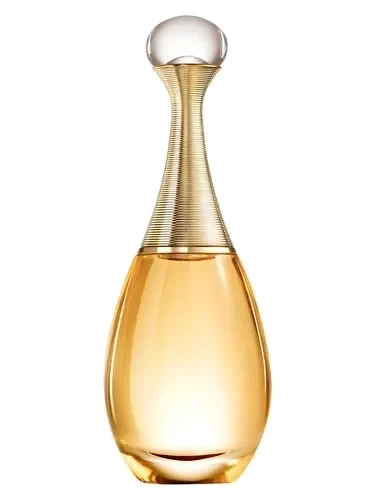
- SmootherDior J’adore Eau de ParfumRose and jasmine too, but with creamy ylang-ylang instead of aldehydes, so it’s smoother and less formal.
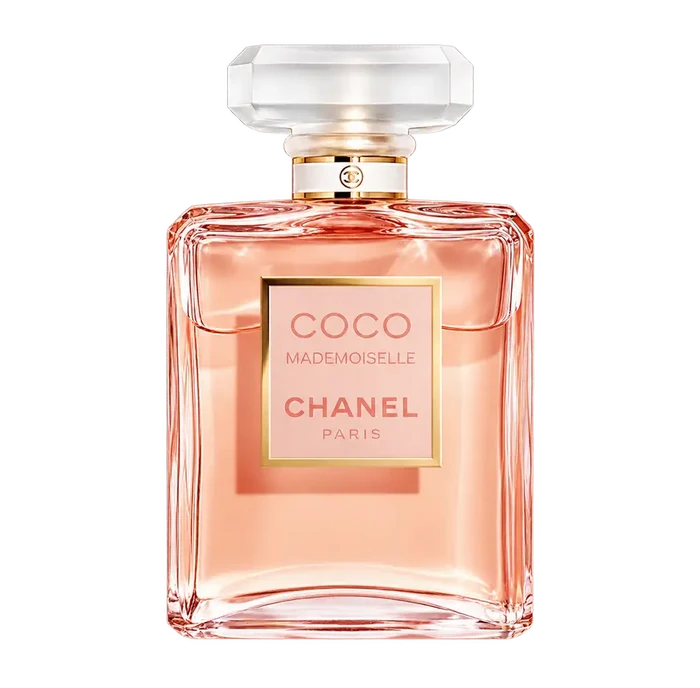
- More modernChanel Coco Mademoiselle Eau de ParfumChanel’s more modern floral: orange, rose and jasmine over patchouli and vetiver. Brighter and much less powdery.
- CheaperEstée Lauder White LinenA 1978 aldehydic floral with the same crisp, soapy sparkle, but cleaner and greener, and much easier on the wallet.
- Less commonFrédéric Malle Iris PoudrePierre Bourdon’s modern aldehydic floral: aldehydes around a powdery iris heart, softened with musk and tonka bean.
More cheaper alternatives to popular perfumes are in our perfume dupes guide.
Comparisons
N°5 questions
Is Chanel No 5 old-fashioned?
Its style is old, but it isn’t a museum piece. The aldehydic floral structure dates from 1921 and was copied so widely that to some people it reads as a mother’s or grandmother’s perfume. The 1986 Eau de Parfum is rounder and warmer than the original, and if you want N°5 at its most modern, L’Eau is lighter and more citrusy. Whether it feels dated depends more on how you feel about powder and aldehydes than on your age.
Which Chanel No 5 is best?
For most people, start with the Eau de Parfum: it balances the sparkle and the warmth, and it’s the easiest to find. Choose L’Eau if you want fresh and light, Eau Première if you want N°5 softer and airier, the Eau de Toilette if you like it drier and woodier, and the Extrait if you want the richest, closest-to-the-skin version. Sample two side by side, since the differences show most in the dry-down.
Does Chanel No 5 last all day?
Not quite, for most people. Expect around six to eight hours from the Eau de Parfum, with the opening at its loudest in the first hour and the powdery base sitting close to the skin after that. Wear reports often say it turns into a skin scent fairly quickly while staying detectable for hours, so a small top-up in the afternoon helps if you want it into the evening.
Chanel No 5 vs Coco Mademoiselle: what’s the difference?
N°5 is aldehydic and powdery; Coco Mademoiselle (2001) is brighter and more modern. Chanel lists orange at the top of Coco Mademoiselle, jasmine and May rose in the heart and patchouli and vetiver in the base, so it shares the rose and jasmine but trades the soapy sparkle for a zesty opening and an earthier dry-down. Choose Coco Mademoiselle if N°5 feels too formal, and N°5 if you like powder and polish.
Can you wear Chanel No 5 every day?
Yes, if you go light. One or two sprays of the Eau de Parfum is enough for the office, and it comes into its own in the evening and in colder weather. For everyday wear in warm weather, L’Eau or Eau Première are easier.
Key notes are from Chanel’s published descriptions; the full note list is from the source named above. Longevity and season are typical figures, not our own measurements. Read how we compare perfumes, or what EDT, EDP and Parfum mean.